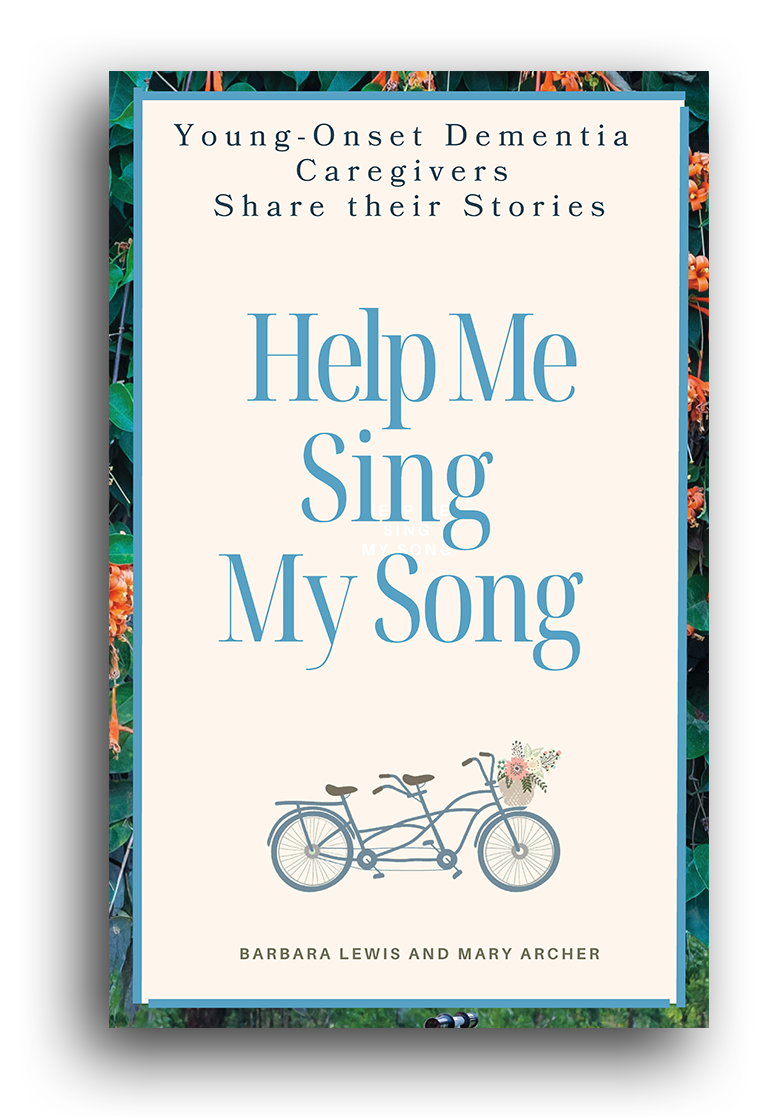
Paperback and ebooks available now:

Do you have a loved one who seems too young to be experiencing confusion and memory loss?
Help Me Sing My Song seeks to help by sharing stories of how others have dealt with similar challenges.
You are not alone. We hope these stories will inspire you.
Why This Book?
We have found that there are too few resources focused on younger families experiencing dementia. Recognizing that there is no one clear path for dementia caregiving, this isn’t a how-to book. Our hope is that by sharing a variety of stories, this book will be relevant for caregivers with different circumstances and experiences. We want to offer encouragement, trigger creative caregiving ideas, and give voice to the struggles of young-onset dementia.
- Brian McCullough, Professional Caregiver
Do you struggle to do it all?
While dementia at any age is tragic, the younger families carry an extra burden.
They may be:
- Still parenting young children
- Working, or struggling to understand what happened after being laid off
- Physically active and engaged in many different activities
- Still creating their financial nest egg
This can lead to a particularly difficult juggling act for the people who care for them. And, yet, there are few resources focusing on this younger population.
- Dr. Joleen Sussman, Geropsychologist
About the Authors
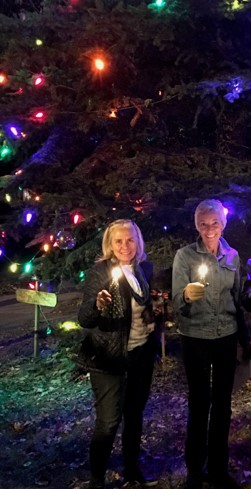
Barbara Lewis and Mary Archer know first-hand and close-up what it means to care for someone who develops dementia (Alzheimer’s or other types) at a relatively young age. Barbara’s husband started having cognitive challenges when he was 55 years old, while still working and parenting. Mary Archer had created a dementia care business which was specifically designed for younger people like Steve. He became one of the very first people to join Mary’s program.
- Amanda Trosten-Bloom
Co-Author, Encyclopedia of Positive Questions
Stories
Who Will You Meet in This Book?
We conducted interviews to learn from caregivers in different circumstances – spouses, adult children, siblings and friends – uncovering what they were doing, what they believed worked best, and what they might imagine could help improve their lives. In this book, you will meet several individuals with young-onset dementia and the families and friends supporting them. A few of them include:
Jane
a single mom raising a daughter. Jane was a divorced mother of a nine-year-old when she experienced the first signs of dementia. Her spirited daughter describes how the two of them ended up raising each other for a while. Jane’s best friend Pam soon stepped up as her primary caregiver or her ‘person,’ as Pam describes it.
“Looking back, I received more than I gave during this journey.”
– Pam, Jane’s friend & care partner
Louise
a Cuban American mother of 6 children. Louise lost much of her inhibition with the onset of dementia, and would dance just about anywhere, anytime, especially if she heard music with a Cuban beat. Her large family rallied to help Louise remain in her home.
“My memories are in a box. Resting.”
– Louise
Joe
Mr. Fix-it from a small town. Robin said she fell in love “the minute I saw Joe riding into town on his motorcycle, with that thick head of hair. He looked like he was one of the Beatles!” Soon afterwards, Joe was drafted and served in the Vietnam War, which decades later played a role in his dementia.
“I felt like I was always running to catch up, the whole time, in shock.”
– Robin, Joe’s wife
What is Young-Onset Dementia/Young-Onset Alzheimers
Today there are millions of Americans who have some form of dementia. Hundreds of thousands of them would be considered “younger.”
There are other ways to describe this condition: younger-onset and early-onset are commonly used. For the sake of simplicity, the term young-onset is the only one used in this book. Generally, this refers to those who are diagnosed with dementia before the age of 65. While dementia at any age is tragic, the younger families carry an extra burden. A person with young-onset dementia will tend to lose their job and driver’s license well before they turn 70. They’ll lose earning potential, sometimes have dependent children to care for, a mortgage to pay, and even elderly parents to look after. The younger person with dementia may be in the prime of their career, beginning to plan for retirement, and be physically active and in excellent health otherwise. It can be very difficult to balance this while experiencing gradual and steady cognitive decline. The unique circumstances of young-onset dementia are further explained in our book.